Should I Hire an Interior Designer Before My Builder?
The honest answer for Glasgow homeowners — and why the order you do things in matters more than most people realise.
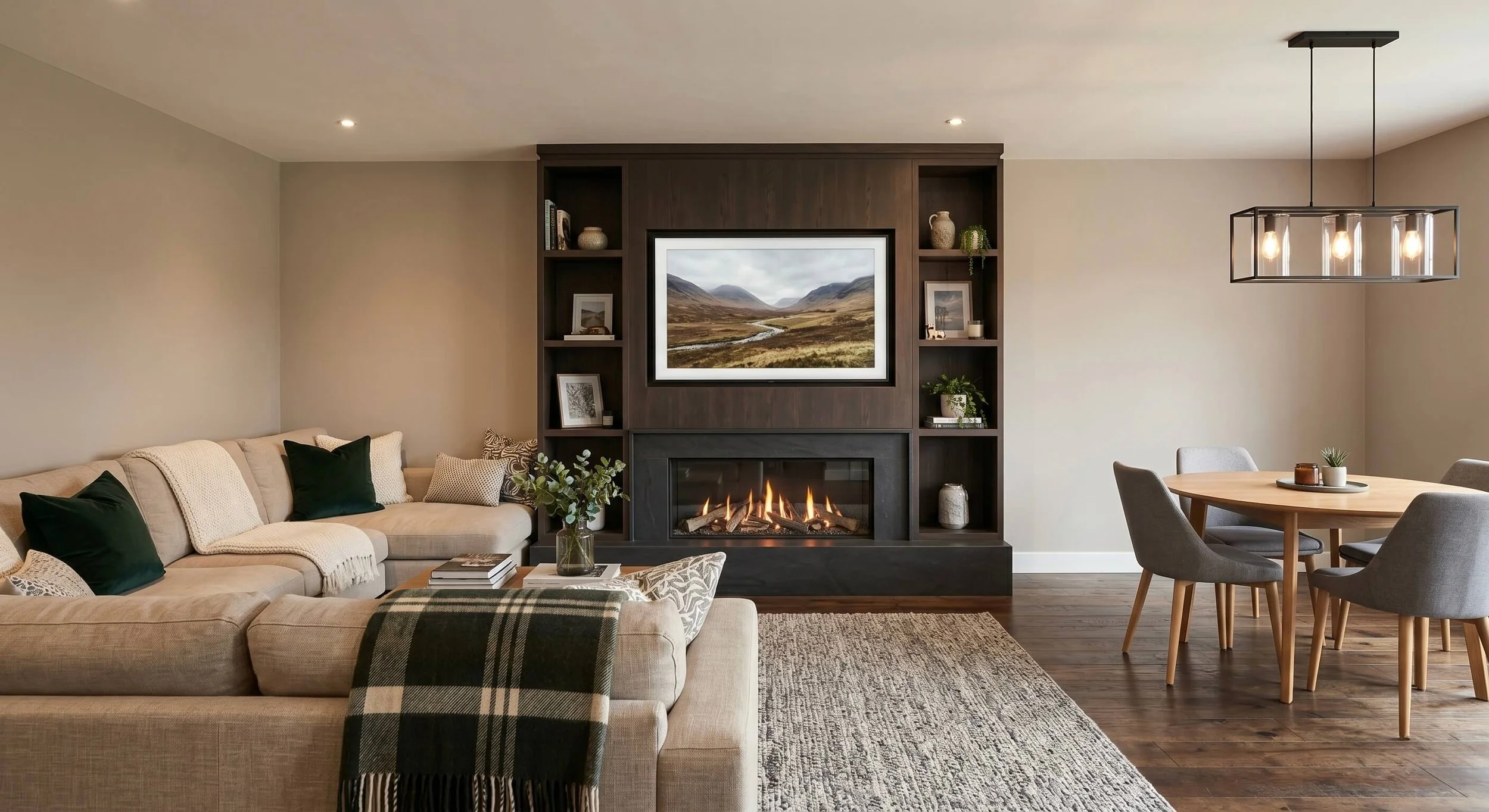
A warm, inviting living space that feels like a real family home — not a show house. Comfortable, personal, and lived in but beautifully designed.
Most homeowners planning a renovation in Glasgow ask the same question in the same order. They decide what they want. They call a builder. They get a quote. They either proceed or feel overwhelmed by the cost and do nothing
What very few people do — and what makes the single biggest difference to the outcome of any renovation project — is speak to an interior designer first. Before the builder. Before the architect. Before a single brick is touched or a quote is requested.
After 37 years in the building industry — as a fully qualified joiner, interior designer, and design-and-build project manager — I want to explain why that order matters so much, and what it can save you in time, money, and stress.
“A house is not a home until it suits the way you live. Start with how you want to live — then design the space around that.”
What an Interior Designer Actually Does First
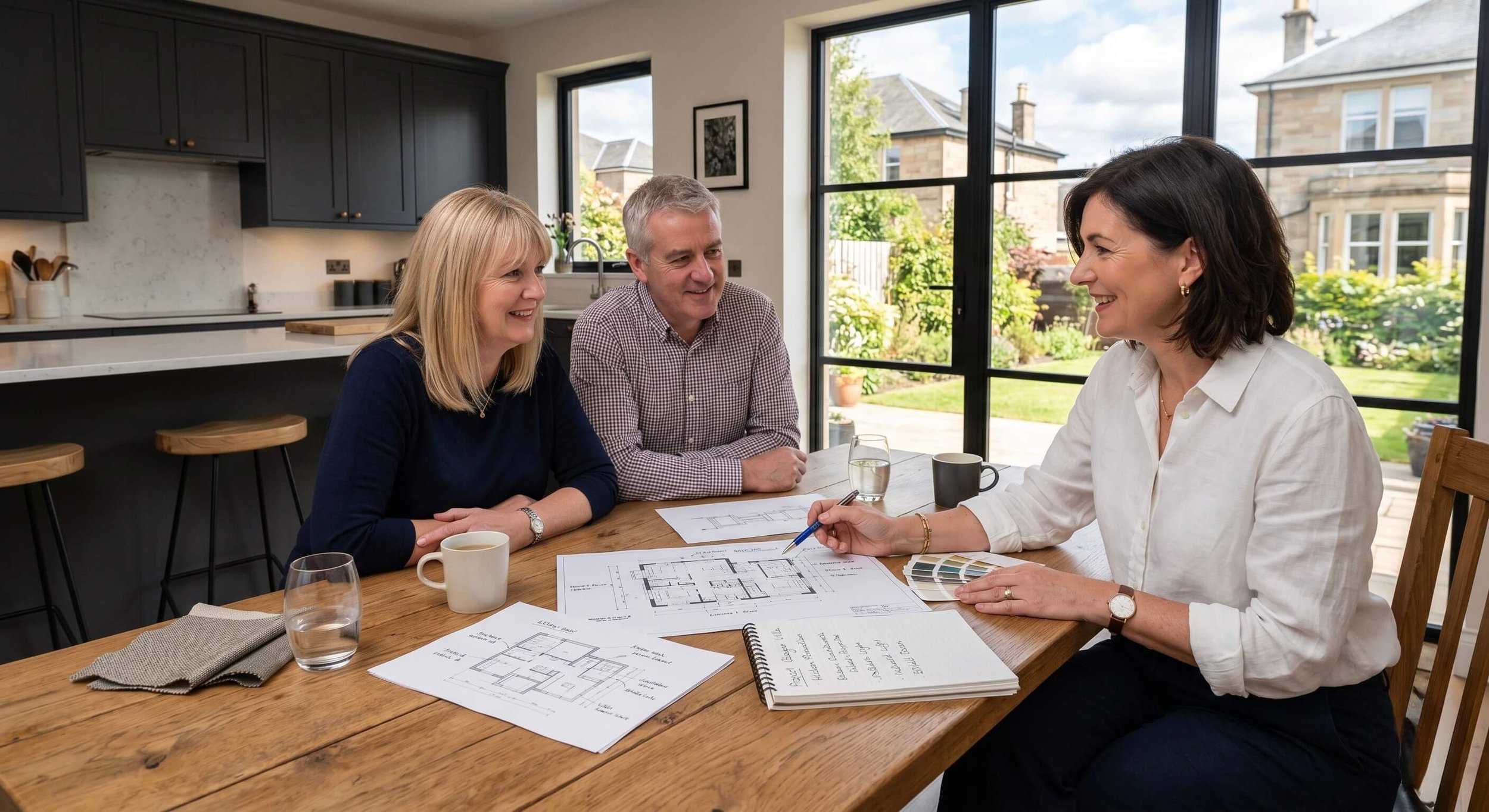
A designer sitting with a family at a kitchen table — notepad, drawings, relaxed conversation. Feels like a genuine consultation not a sales meeting.
Before I talk about walls, extensions, or kitchens, I sit down with you, with your partner and sometimes with your children and your pets. I listen.
I want to know what does not work for you right now. Where you trip over shoes when you come in the door. Whether clothes are exploding out of wardrobes. Whether someone is drying their hair in the hall because there is nowhere else to go. Whether the family cannot eat together because the kitchen is too small or the dining area does not exist.
These are the pain points. And they are always different for every single family, because every single person on earth is unique. What works beautifully for one household is a disaster for another.
I have designed display cabinets specifically for a Lego collection. I have designed a kitchen layout around two small poodles. I have reorganised a living space for someone with a back problems so they never have to bend down to use their washing machine or oven again. There is always a way to solve the problem — but first you have to understand what the problem actually is.
That is what I do before anyone else gets involved.
The Most Common Situations I Find Clients In
When homeowners first contact me, they are usually in one of these situations:
They are at breaking point with their current space and simply do not know where to start
They have already commissioned an architect and the design does not reflect how they actually live
They have a builder lined up but no clear design or vision for what they want
They have spent money on plans that are too expensive to build
They have moved into a new house and it does not feel like home
Every single one of these situations has one thing in common — the design conversation happened too late, or did not happen at all.
What Goes Wrong When a Designer Is Not Involved From the Start
I want to be honest about what I see happen regularly when homeowners skip the design stage and go straight to an architect or builder:
The architect designs what looks good on paper but never asks how the family actually uses the space. The result is beautiful on a drawing — and impractical to live in.
The builder builds exactly what they are told. They are skilled at construction, not at designing how a family eats, sleeps, works, and lives. That is not their job.
Money gets spent on the wrong things because nobody asked the right questions first. A large open-plan extension is ordered when a well-designed reorganisation of the existing space would have solved the problem at a fraction of the cost.
The vision in the client’s head and what actually gets built are completely different. Because without a clear design brief, every person involved will interpret the brief differently — and none of them will interpret it the way you imagined it.
“You need a vision first. An image. A plan. Something the architect and builder can see. Because what you imagine and what they build without a clear brief are two very different things.”
A Real Example — Two Years and Double the Budget
A client came to me with a vision of a large extension. They had been working with an architect for two years. Every time a design was produced and priced, it came back at double their budget.
The architect was drawing what the client described — but without the constraint of a realistic budget, and without understanding what the family actually needed internally. The drawings kept growing. The costs kept growing.
When I got involved, I started where I always start — with how the family lived, what they needed, and what budget they had to work with. I designed the interior first. I reduced the extension by 50% and reimagined their current living space. And I gave the clients exactly what they needed, within their budget, on the first attempt.
Two years of frustration and wasted architectural fees — resolved by starting with the right conversation.
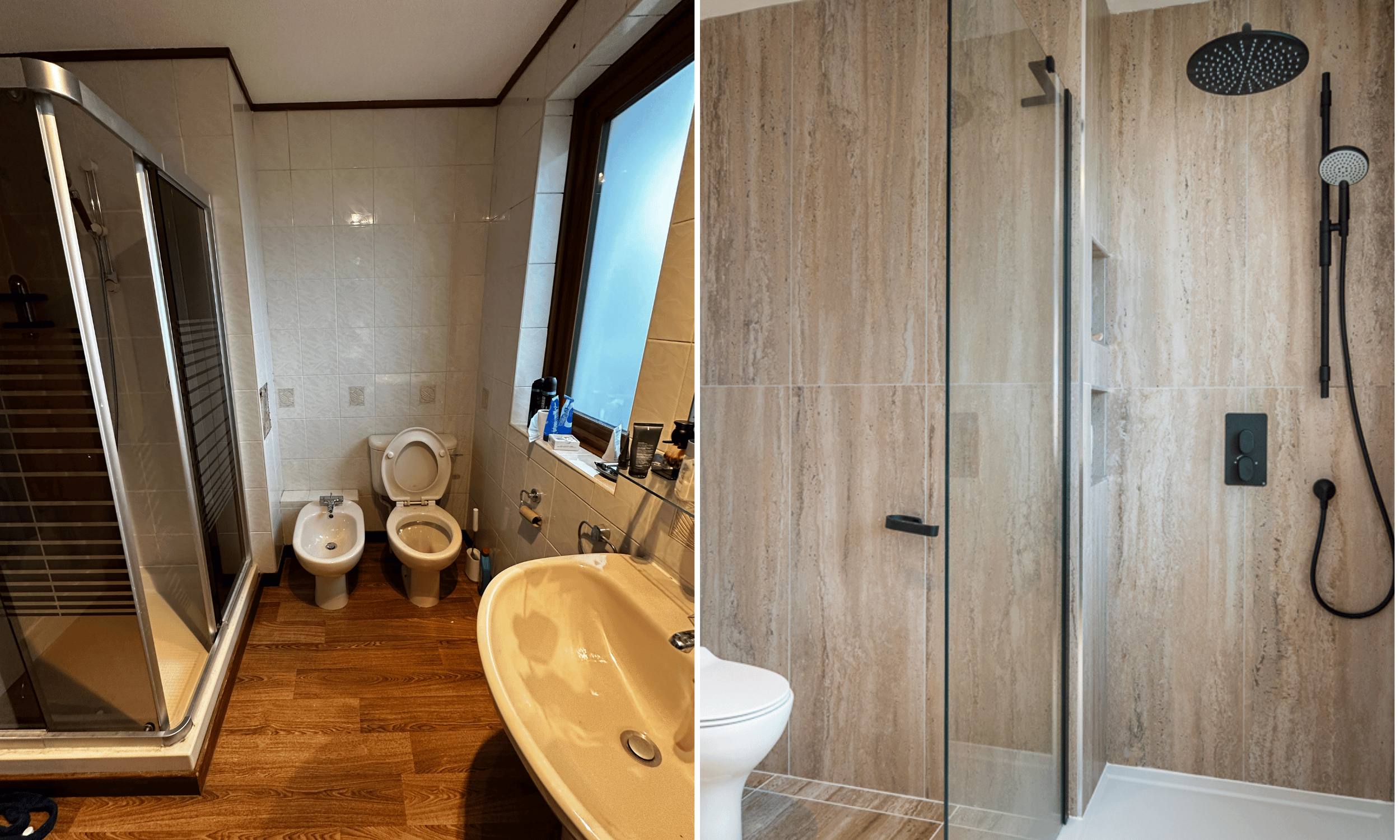
A before and after split image — one side showing a cluttered, outdated space, the other showing a beautifully designed transformation.
Why the Interior Designer Should Come Before the Architect
The architect’s and structural engineers’ jobs are to design a structure that is safe, legal, and buildable. They are experts in planning, building warrants, and structural compliance. That expertise is essential — but it comes after the vision, not before it.
If you brief an architect without a clear interior design vision, they will design what they think you want based on what you have described in conversation. Their perception and your perception are two different things. And once plans are drawn, submitted for planning permission, and approved — changing the design becomes expensive and time consuming.
When I am involved first, the architect receives a clear, detailed brief. They know exactly what needs to happen internally — where the kitchen is, how the family flows through the space, where the storage goes, what the ceiling heights need to be, where the light should come from. The architectural design is built around the life that will be lived inside it, not the other way around.
Why the Interior Designer Should Come Before the Builder
A builder’s expertise is in structure — foundations, walls, roofs, steels, openings. Once the building work is complete, the project is yours to manage. As I have written about before, the builder hands you the keys and leaves
Without a design brief, a builder will price what they imagine you mean. Vague briefs produce vague quotes with many variation clauses. The project starts, interpretations diverge, and costs escalate.
With a clear interior design vision in place, the builder has a precise brief. Every trade knows what they are building towards. The kitchen fitter knows the exact dimensions. The electrician knows where every socket and light needs to be. The plumber knows where every pipe needs to run. Nothing is left to interpretation.
It Is Not Always a Big Extension
One of the most important things I do is challenge the assumption that a big renovation is always the answer.
I have had clients who were ready to move house — genuinely convinced their home was beyond saving — and with some careful space planning and redesign of what already existed, they fell back in love with their home. No extension. No structural work. Just the right design for how they actually lived.
Sometimes the problem is a wall in the wrong place. Sometimes it is a kitchen in the wrong location. Sometimes it is simply that a space has never been designed for the people living in it.
I work from the inside out. I identify what you need internally — not just what will look impressive from the street. A home has to be practical and work for every single person in the family. And to understand that, I need to get to know you first.
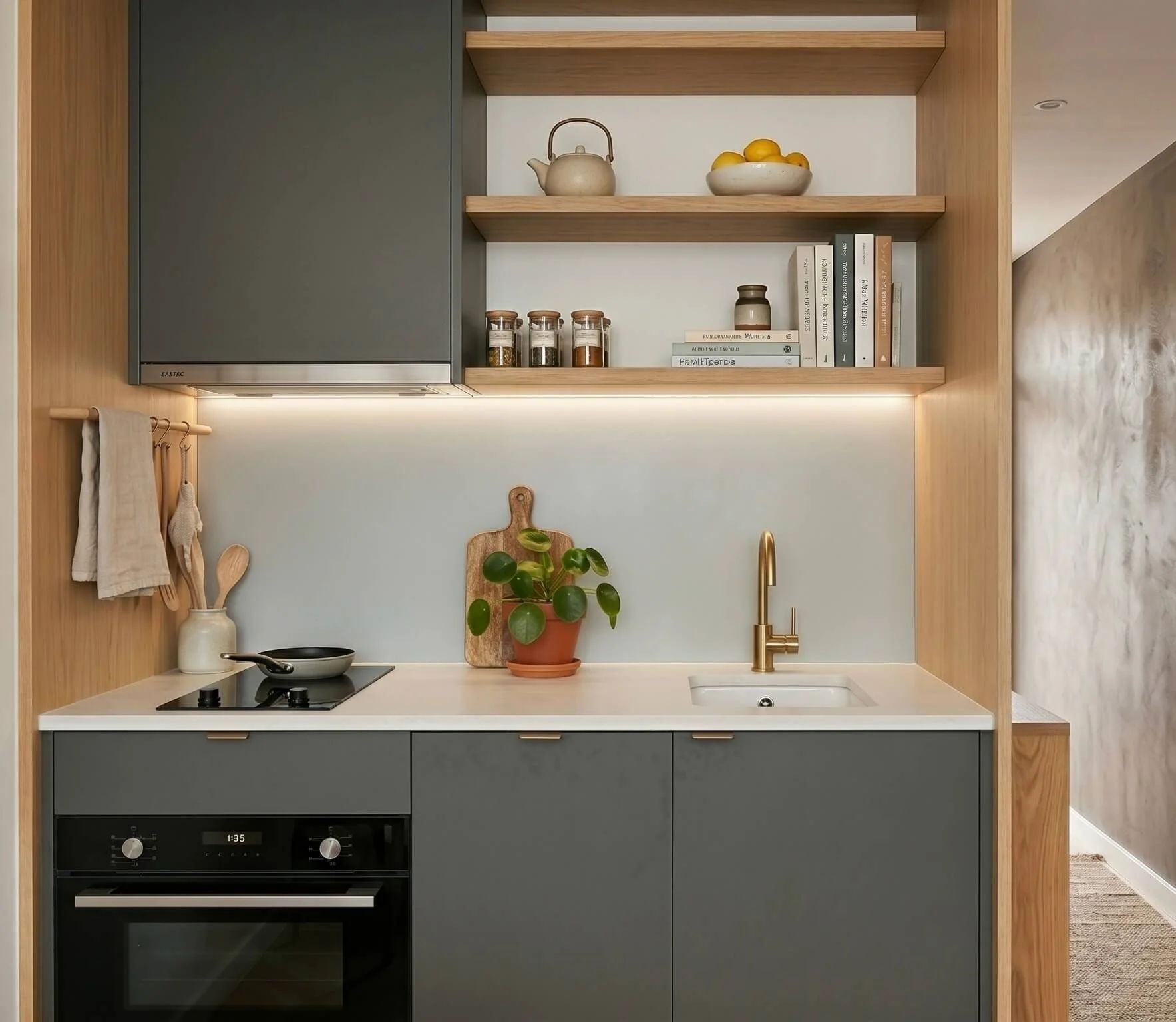
A clever, well designed small space — a compact kitchen that feels organised, calm, and considered. Shows that good design does not always mean big works.
What I Ask Every Client
What is annoying or frustrating you?
What does not work?
What will make you happy in your home?
If a builder can answer those questions for you — brilliant. But in 37 years, I have never met one who starts there.
A tidy, well-designed home is a tidy and peaceful mind. Nobody genuinely enjoys living in chaos — even if they have learned to tolerate it. Harmony can be found in organising and creating the ideal place where you spend most of your life. Your home should be a joy to live in every single day.
That is what good interior design does. And it starts with a conversation — long before the architect arrives, and long before the builder picks up a single tool.
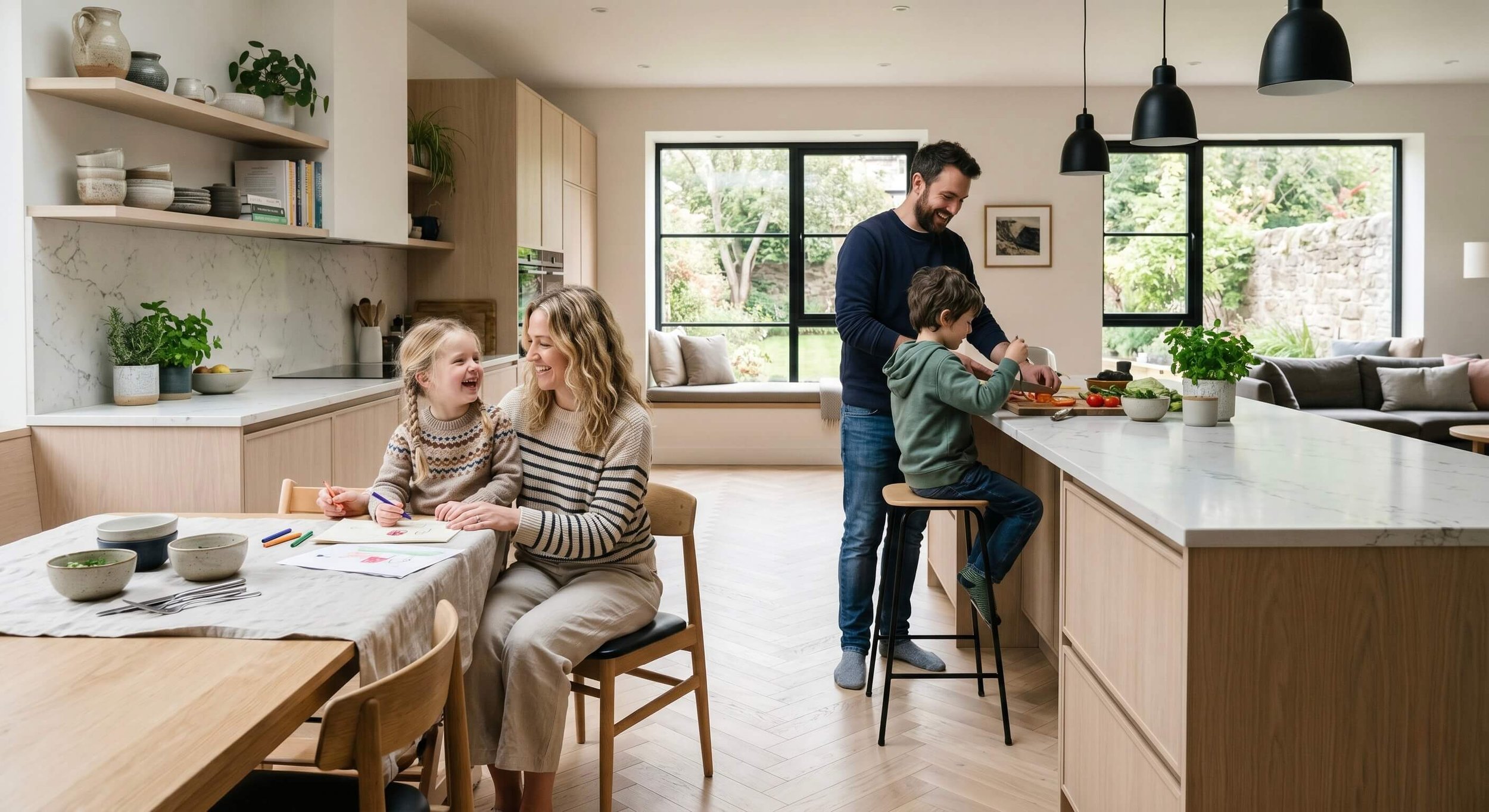
Something that conveys peace, harmony, and a family enjoying their home — the emotional payoff of getting the design right.
Where Interior Space Design Fits In
At Interior Space Design, every project begins with a complimentary interior design discovery call. Before any architect is briefed or any builder is contacted, I listen to how you live, what is not working for you, and what your home could become. That conversation costs nothing — and it is where every great renovation starts
That vision becomes the brief that every other professional works from. The architect designs around it. The builder builds to it. Every trade understands it. And you end up with a home that was designed for you — not for someone’s interpretation of a vague description.
We also offer a QS report service from only £360, giving you an accurate independent cost assessment before a single tradesperson visits the property. So you always know what your project will cost before you commit to anything.
Ready to Start With the Right Conversation?
If you are planning a renovation, extension, or redesign in Bearsden, Milngavie, Jordanhill, Lenzie, Milton-of-Campsie, Bishopbriggs, Hyndland, or the West End of Glasgow — start here.
Every project begins with a complimentary discovery call. No obligation. No pressure. Just the right questions, asked in the right order.
